
Blue crab
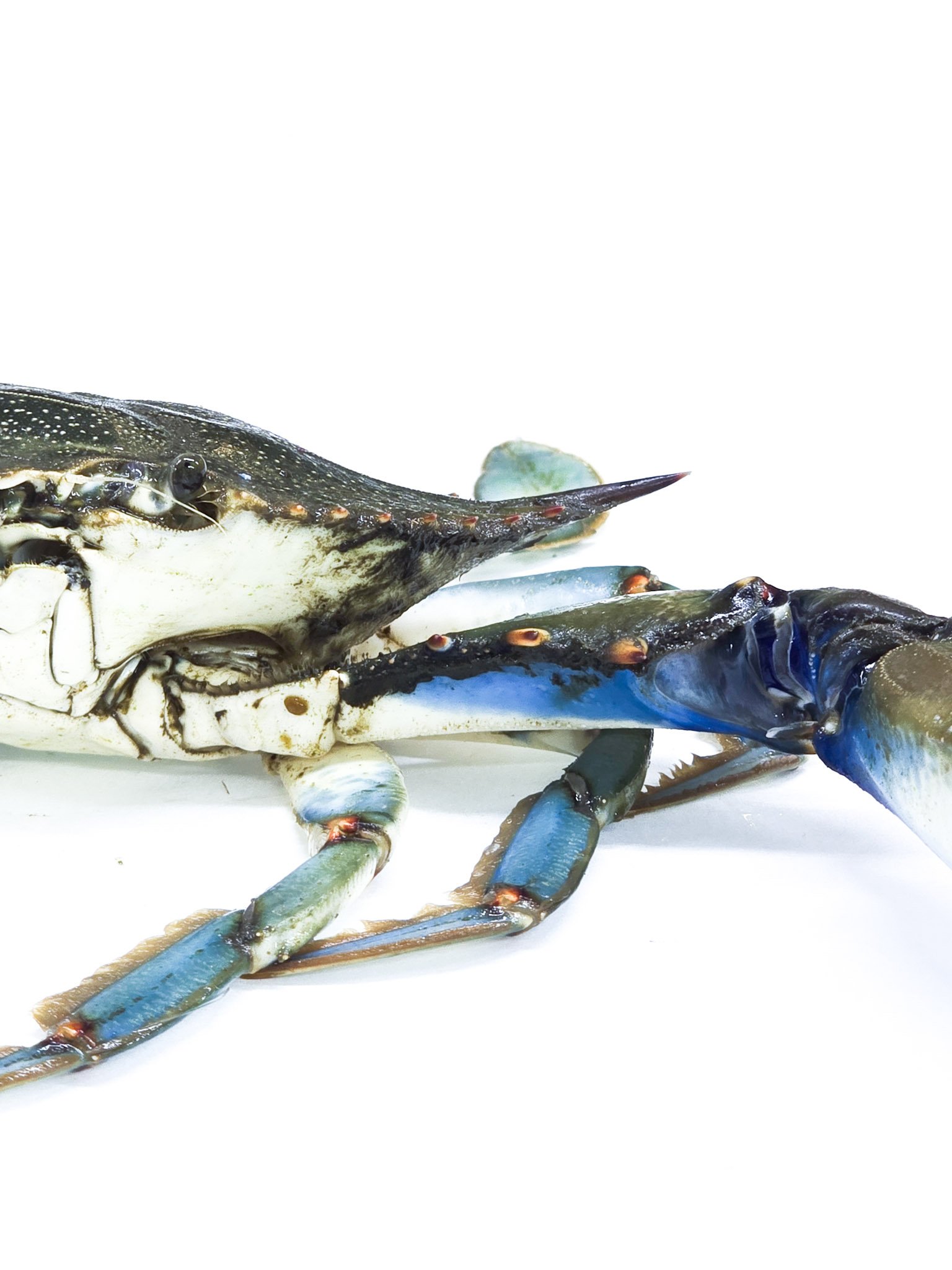
Blue crabs are an iconic part of North Carolina's coastal culture, thriving in the shallow, brackish waters of the Albemarle and Pamlico Sounds. Beneath the surface, they weave through marsh grasses, oyster beds and tidal creeks, feeding on everything from small fish and shellfish to plants and other crustaceans. Their adaptability and abundance make them an essential part of the state's rich estuarine ecosystem.
The commercial blue crab season typically begins in late spring and runs through the autumn. As the water warms, the crabs grow larger, their shells harden and they fill out with the sweet, succulent meat that makes them one of the East Coast's most sought after shellfish. By late summer, they are at their very best. Anyone who has handled a basket of live blue crabs knows they are not afraid to put up a fight, and those powerful claws command respect.
Steaming is the traditional way to prepare blue crabs, locking in their natural sweetness while keeping the meat wonderfully moist. They are often served whole, piled high on newspaper covered tables alongside wooden mallets, melted butter and plenty of cold drinks. Picking crabs is as much about gathering with family and friends as it is about the meal itself, with conversation flowing just as freely as the crab juices.
If you're buying live blue crabs from Zora's, be sure to bring a sturdy cooler. These crabs are very much alive and will happily remind you if you're not paying attention. They are best cooked the same day they're purchased, as live crabs don't keep well. Once steamed, however, they can be refrigerated for a couple of days and gently reheated or enjoyed cold in salads, sandwiches or crab cakes.
One of the fun things about blue crabs is telling the males from the females. Turn the crab over and look at the apron on the underside of the shell. Males have a long, narrow, pointed apron, while females have a much wider, rounded one. Mature females also develop striking orange red claws, whereas males have blue claws tipped with red.
Blue crabs are prized for their delicate, naturally sweet flavour and clean, ocean fresh taste. The body meat is soft, flaky and subtly sweet, while the claw meat is firmer, richer and slightly more savoury. Steaming intensifies their natural sweetness and leaves a lightly buttery finish that needs little more than Old Bay, a splash of vinegar, a squeeze of lemon or a little melted butter. Refined yet comforting, blue crabs are one of the true tastes of the North Carolina coast.
-
ways to cook it
Southern Conundrum: Should You Boil or Steam Blue Crabs? You know what we think….
-
Drinks pairings
A dry sherry offers nutty, saline notes that complement the crab’s richness, while a bright clarified margarita brings a zesty, refreshing contrast. Orange wine adds subtle tannins and citrus that shine with crab cakes, and an herbal aquavit pairs beautifully with fresh, chilled crab salads. Tart, salty Gose or Berliner Weisse beers help reset the palate - especially when Old Bay seasoning is in the mix. A light Japanese whisky highball lifts savory crab dishes without overpowering them, while a sparkling Lambrusco adds fruity fizz that’s perfect for anything grilled. And of course, smooth Junmai Ginjo sake matches the crab’s delicate sweetness with ease.
For non-alcoholic pairings, try a crisp citrus seltzer or sparkling yuzu soda to cut through the crab’s natural richness. Cold-brewed green tea or jasmine tea offers gentle floral notes that complement rather than compete. A non-alcoholic G&T or botanical spritz brings herbal brightness similar to aquavit or a highball. Even a chilled, lightly salted lemonade or lemon-ginger shrub can enhance the sweet, briny character of the meat.
Or whatever you fancy - it's crab, and it’s party time.