
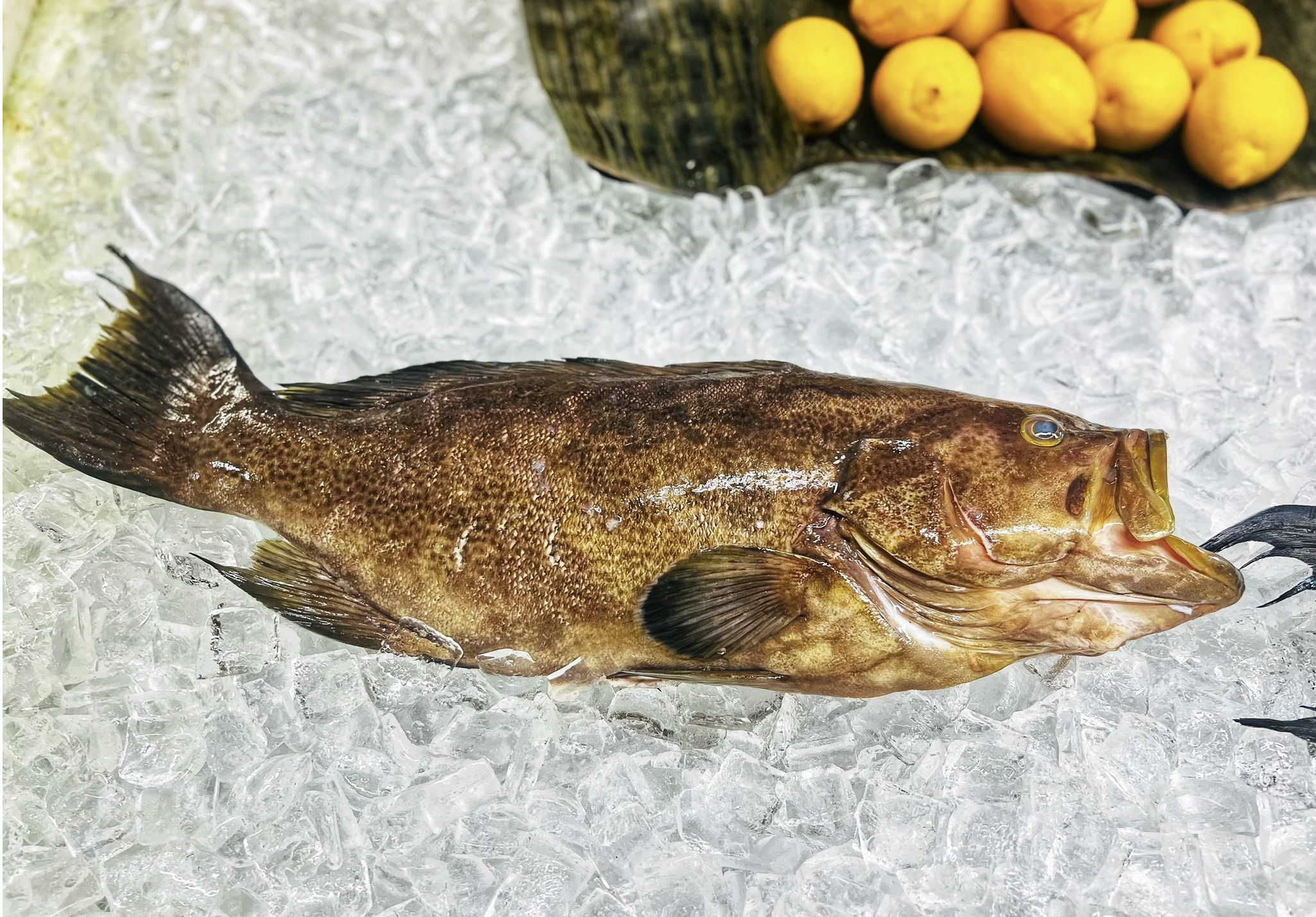
SCAMP grouper
Often called the “filet mignon” of groupers, Scamp Grouper earns its reputation through restraint rather than showmanship. Sleek, subtle, and quietly luxurious, it’s a smaller cousin in the grouper family that delivers outsized flavor and versatility. A true reef-dweller, Scamp prefers rocky ledges and deep coral structures, where it feeds selectively on shrimp, crabs, and smaller fish. That picky diet plays a role in its delicate, slightly sweet flavor, setting it apart from heavier, more assertive white fish.
Scamp Grouper is also prized because it isn’t abundant. Slow-growing and long-lived—often reaching 20 years or more—it has peak spawning seasons from early spring through summer, which limits harvest windows. Combined with its high culinary demand, this makes Scamp a specialty catch, particularly in smaller or quality-driven markets. When you see it offered fresh, it’s a signal that care has been taken from water to counter.
On the plate, Scamp Grouper strikes a rare balance: rich yet clean, refined without feeling precious. Its flavor is often compared to a cross between red snapper and halibut, but with a softer, rounder finish that lingers gently. The texture is moist, fine-grained, and lightly flaky—delicate, yet sturdy enough for pan-searing, grilling, or roasting without falling apart. Lean but never dry, and free of aggressive fishiness, Scamp adapts effortlessly from coastal comfort dishes to polished fine-dining presentations, making it a quiet favorite among chefs who value elegance without excess.
-
ways to cook it
Scamp Grouper shines in preparations that let its subtlety speak. Its mild sweetness, fine texture, and clean finish make it especially well-suited to techniques that enhance—rather than mask—its natural character.
Grilled with citrus herb butter or a smoky paprika rub, letting high heat bring out gentle richness while keeping the flesh tender
Pan-seared with garlic, white wine, and lemon zest for a crisp exterior and silky interior
Baked with olive oil, cherry tomatoes, capers, and fennel for a bright, Mediterranean-style preparation
Poached gently in coconut milk with lime leaves and ginger, highlighting its delicate structure with aromatic warmth
Lightly fried with a cornmeal crust and served with remoulade for a Southern spin that still respects the fish’s finesse
No matter the method, Scamp Grouper rewards a light hand—simple seasonings, careful heat, and a little restraint let this “filet mignon” of the sea truly shine.
-
Drinks pairings
Scamp Grouper’s refined sweetness and flaky, buttery texture call for pairings that are crisp, elegant, and thoughtfully restrained. The goal is to lift the fish, not compete with it. Clean acidity, subtle aromatics, and a touch of minerality work beautifully—especially with grilled, pan-seared, or simply prepared Scamp.
For wine lovers, unoaked white Burgundy (Chardonnay) is a classic match, offering soft minerality and freshness that mirrors the fish’s clean finish. Soave or Vermentino bring a saline, citrusy lift that feels tailor-made for coastal preparations, while Riesling Kabinett or Grüner Veltliner shine when Scamp is paired with spice, herbs, or Thai-inspired flavors—their acidity and gentle sweetness balance heat without overwhelming the dish. Sparkling options like Cava or Champagne work especially well with richer sauces, adding brightness and texture without weight.
Non-alcoholic pairings can be just as elegant. Think cucumber and lime spritzers, sparkling water with lemon peel and fresh herbs, or a ginger-lime tonic to echo Scamp’s clean, oceanic profile. For something more layered, try chilled green tea with citrus, grapefruit soda with a pinch of sea salt, or a verjus and soda spritz for acidity without alcohol.
If cocktails are on the table, keep them light and herbal. A Cucumber Gimlet, Basil-Lime Collins, or Dry Sherry Highball complements Scamp’s subtle richness without masking it. For celebratory meals, a Champagne cocktail or sparkling spritz adds lift and polish, letting the fish remain the star—exactly where Scamp Grouper belongs.