
Exploring the cuts of fish…
Fish isn’t just a healthy protein—it’s one of the most versatile ingredients in the kitchen. Every cut offers something different, from meaty steaks to delicate cheeks, and understanding those cuts can help you cook more confidently, waste less, and discover new ways to enjoy seafood. At Zora’s Seafood Market, we’re happy to cut your fish however you like, and offer advice on the best approach for both the species and the dish you have in mind.
Fillets are often the first thing that comes to mind when people think of fish. These nearly boneless sides are quick to cook and easy to prepare, whether pan-seared, baked, grilled, or fried. A whole fillet includes all the edible parts, but there are refined variations: a V-cut removes the pin bones for a clean bite, while a J-cut takes out both the pin bones and the fatty nape near the head for a more polished presentation. Round fish like cod, snapper, salmon, or trout give two symmetrical fillets, while flatfish such as flounder or halibut offer a larger fillet on one side and a smaller one on the other. Fillets can also be portioned into bite-sized pieces for tacos, rice bowls, or meal prep, and cuts like the center-loin are thick and uniform for even cooking, while tail cuts are thinner but just as flavorful. Skin-on fillets give crispiness when seared, while skin-off is perfect for poached fish or ceviche. Some species, like triggerfish, have tough skins that aren’t edible, while snapper may keep its skin for salt-baked preparations to protect the flesh.
For larger fish, steaks are a meaty, grill-ready option. Cut perpendicular to the spine, they usually include a bit of backbone and may retain skin and belly. Thick, satisfying, and rich in flavor, steaks are perfect for grilling or broiling—think of them as the seafood version of a beef steak. Loins, on the other hand, are boneless, uniform cuts prized for sashimi or grilled presentations. On larger species like tuna, the top loin is leaner and meatier, while the belly loin is fattier and indulgent, offering consistent texture and easy cooking.
Cooking whole fish may seem intimidating, but it’s one of the best ways to lock in moisture and flavor. Whole round fish come with the head and organs intact, while dressed fish are cleaned and gutted with scales and fins removed. Bones and skin help retain moisture, cavities can be stuffed with herbs or citrus, and the presentation is stunning. Butterfly cuts are an elegant alternative, exposing more surface area for heat and making it easy to stuff or pan-fry. Then there are the hidden gems: cheeks, tender morsels from the face, and collars, taken from behind the gills. Both are rich, flavorful, and often considered delicacies—grill or sauté them, and you’ll see why.
The beauty of fish is that nothing truly goes to waste. From prime fillets to overlooked collars and cheeks, every part has a purpose. Exploring different cuts opens up new possibilities, whether you’re trying a simple weeknight recipe or crafting an impressive dinner for guests. Understanding the structure of the fish not only improves your cooking but also deepens your appreciation for what’s on your plate.
At Zora’s we will cut your fish exactly how you’d like it and we are happy to give you advice if you are unsure.
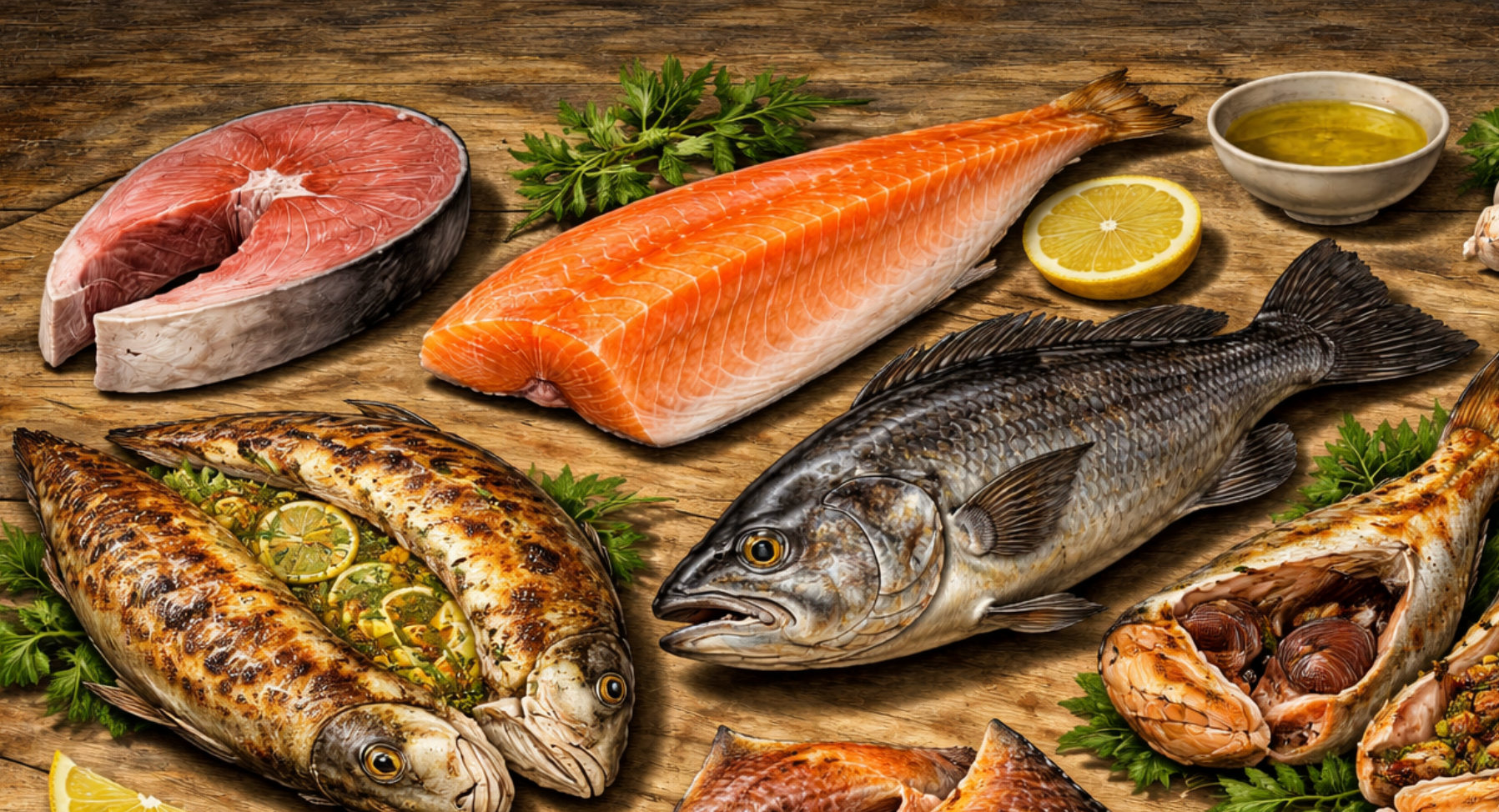
SUMMARY
Fillets – taken from the sides of the fish, usually boneless, with variations like whole fillets, V-cuts (pin bones removed), or J-cuts (pin bones and nape removed).
Portions – fillets cut into bite-sized or uniform pieces, including center-cuts (thick, prime section) and tail-cuts (slightly thinner, still flavorful).
Steaks – thick cross-sections cut perpendicular to the spine, often including skin and backbone, ideal for grilling or broiling.
Loins – thick, boneless sections from larger round fish, with top loins being leaner and belly loins richer and fattier.
Whole Fish – cooked either round (head and organs intact) or dressed (cleaned, gutted, scaled).
Butterfly Cuts – split along the backbone while keeping both sides attached by the skin, creating a flat, symmetrical shape.
Cheeks – small, tender nuggets of meat from the face of the fish, delicate and flavorful.
Collars – taken from behind the gills where the head meets the body, rich in fat and flavor, especially delicious when grilled or broiled.