
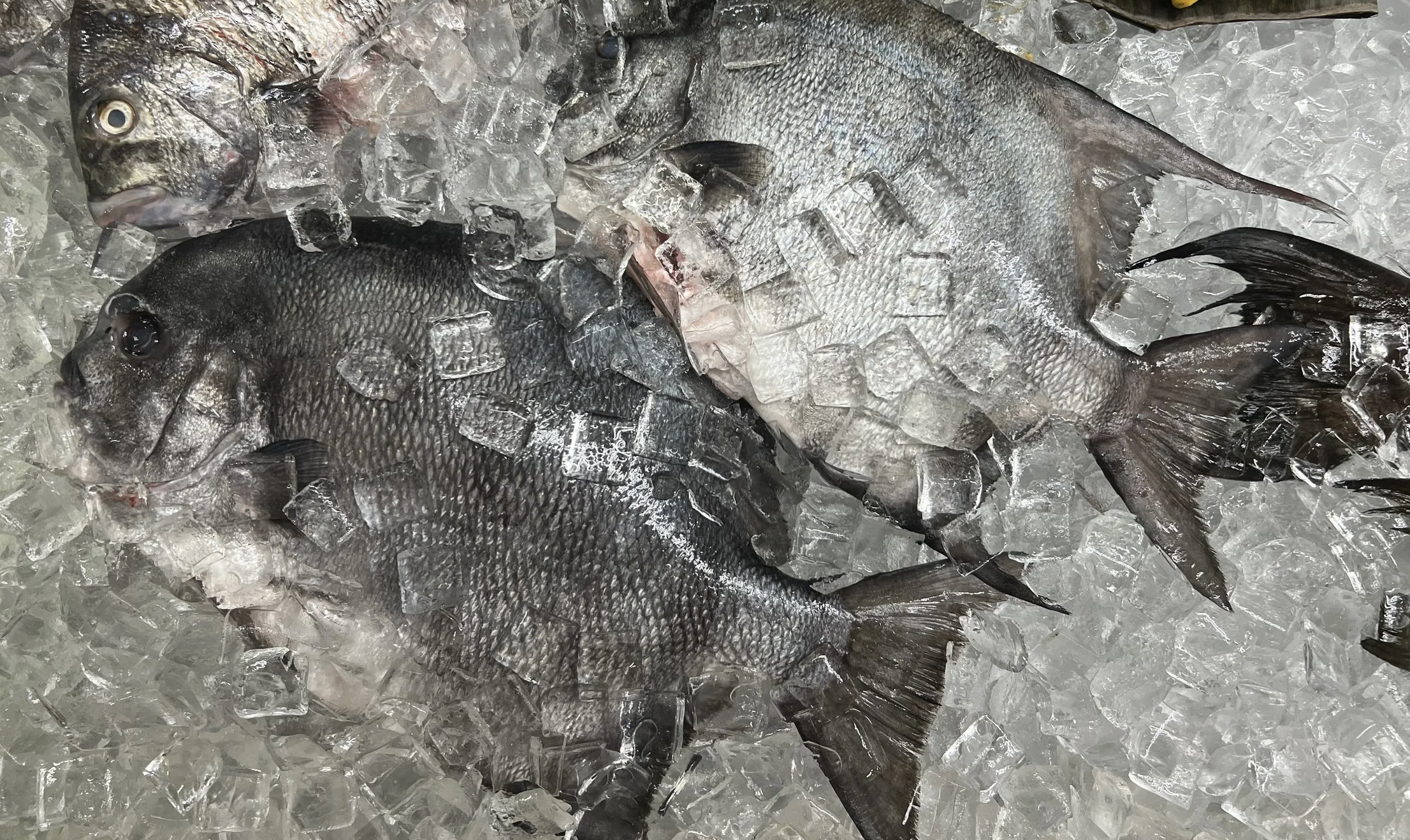
spadefish
Spadefish may not be the first species that comes to mind when you think of seafood, but once you’ve tried it, it’s hard to forget. With its distinctive deep-bodied, disk-like shape—almost angelfish-esque—and bold vertical black stripes across a silver body, it’s a showy species that catches the eye underwater, yet rarely appears on dinner plates. That’s a shame, because Spadefish is mild, clean-tasting, and surprisingly versatile, making it a delightful choice for both home cooks and professional chefs. Its approachable flavor and texture allow it to shine in a variety of cooking methods without overpowering the palate.
Native to the Western Atlantic, the Atlantic Spadefish (Chaetodipterus faber) ranges from New England to Brazil, though it is most abundant in the southeastern U.S., the Gulf of Mexico, and the Caribbean. They often congregate in large schools around wrecks, reefs, and rocky outcrops, moving gracefully through the water with a mix of curiosity and elegance. Despite their abundance in these habitats, Spadefish are rarely targeted by commercial fisheries, meaning they usually arrive at market as bycatch or via small-scale, local fishers. Their relative obscurity makes them a sustainable option for adventurous eaters seeking something fresh, local, and environmentally conscious.
In terms of flavor and texture, Spadefish is approachable and versatile. Its meat is mild, slightly sweet, and very clean, with none of the strong “fishy” notes that can intimidate newcomers to seafood. It has a somewhat firm yet tender texture, moist and flaky when cooked properly, holding together beautifully whether pan-seared, grilled, or baked. The flesh is moderately lean, similar to snapper or black bass, which keeps it from becoming greasy while still allowing it to absorb marinades, herbs, and spices. Aromatically, it’s fresh and neutral when raw, with a gentle oceanic aroma that deepens slightly when cooked.
Spadefish’s gentle flavor and firm texture make it a perfect blank canvas in the kitchen. It shines when prepared simply, with light seasoning, a squeeze of citrus, or a touch of herbs, allowing its subtle sweetness to come forward. From grilling whole with olive oil and thyme to pan-searing fillets with garlic and butter, or even baking with a tomato-herb crust, Spadefish adapts effortlessly to different culinary styles. Its clean taste also pairs well with bold flavors, including chiles, tropical fruits, or Asian-inspired sauces, making it a versatile and underappreciated gem in any seafood repertoire.
-
ways cook it
Grilled: Brush with olive oil, lemon, and herbs; excellent with skin-on fillets or whole.
Pan-Seared: Crispy skin and flaky meat; try finishing with butter, garlic, and a squeeze of citrus.
Blackened: A Creole spice rub and hot cast-iron skillet work wonders.
Oven-Roasted: With cherry tomatoes, olives, capers, and white wine for a Mediterranean twist.
Fish Tacos: Lightly battered and fried or simply grilled, topped with lime crema and slaw.
Poached: Gently simmer in a broth of coconut milk, lemongrass, and ginger for Southeast Asian flavor.
Because Spadefish isn’t oily or strongly flavored, it benefits from bright, aromatic accents that enhance its natural delicacy - think citrus, fresh herbs like thyme, parsley, or tarragon, along with garlic, shallots, and mild peppers. Its clean taste also pairs beautifully with bolder preparations: Creole spices bring smoky heat for blackened dishes, coconut-based sauces add tropical richness, and light vinaigrettes or salsa verde offer a refreshing, herbaceous finish.
-
Drinks pairings
Spadefish pairs wonderfully with crisp, citrus-forward drinks that complement its mild, slightly sweet flavor without overpowering it. For alcoholic options, a zesty white wine like Vermentino, Sauvignon Blanc, or Verdejo highlights the fish’s delicate sweetness while adding a touch of bright acidity and subtle salinity that echoes its oceanic origins. Beer lovers can opt for a Belgian Witbier, whose notes of coriander and orange peel bring a hint of spice and freshness, especially when the fish is grilled or seasoned with herbs. On the cocktail side, a Southside—with gin, lime, and fresh mint—offers a refreshing, herbaceous pairing, while a Caipirinha delivers vibrant, lime-forward brightness that lifts the fish. Even a clean, no-frills Margarita works beautifully, particularly alongside Creole or tropical-inspired preparations.
For non-alcoholic pairings, think fresh, light, and aromatic. A sparkling water infused with cucumber, lemon, or lime mirrors the citrusy notes often served with Spadefish and keeps the palate refreshed. Citrus-green teas—such as iced lemon-verbena or yuzu green tea—bring gentle acidity and herbal complexity that pair well with pan-seared or baked fillets. For a touch of tropical flair, a charred pineapple-lime agua fresca or grapefruit-ginger soda adds brightness and balance, while an apple-fennel tonic or lightly sweetened hibiscus tea enhances subtle sweetness and rounds out the flavor. These options let the fish’s gentle flavor shine, whether enjoyed at a casual weeknight meal or a more elevated seafood dinner.
By choosing drinks that highlight freshness, acidity, and subtle aromatics, Spadefish can truly be enjoyed as the versatile, approachable, and elegant fish that it is. Whether your preference leans toward crisp whites, zesty cocktails, or inventive non-alcoholic refreshments, each pairing can enhance the fish’s clean taste while keeping the meal bright and balanced.